Sinking Funds Explained: Save for Big Expenses Without Going Into Debt
A sinking fund turns a $900 car insurance bill into a $75 monthly habit. Here is the three-step setup — and the line between sinking funds and your emergency fund.
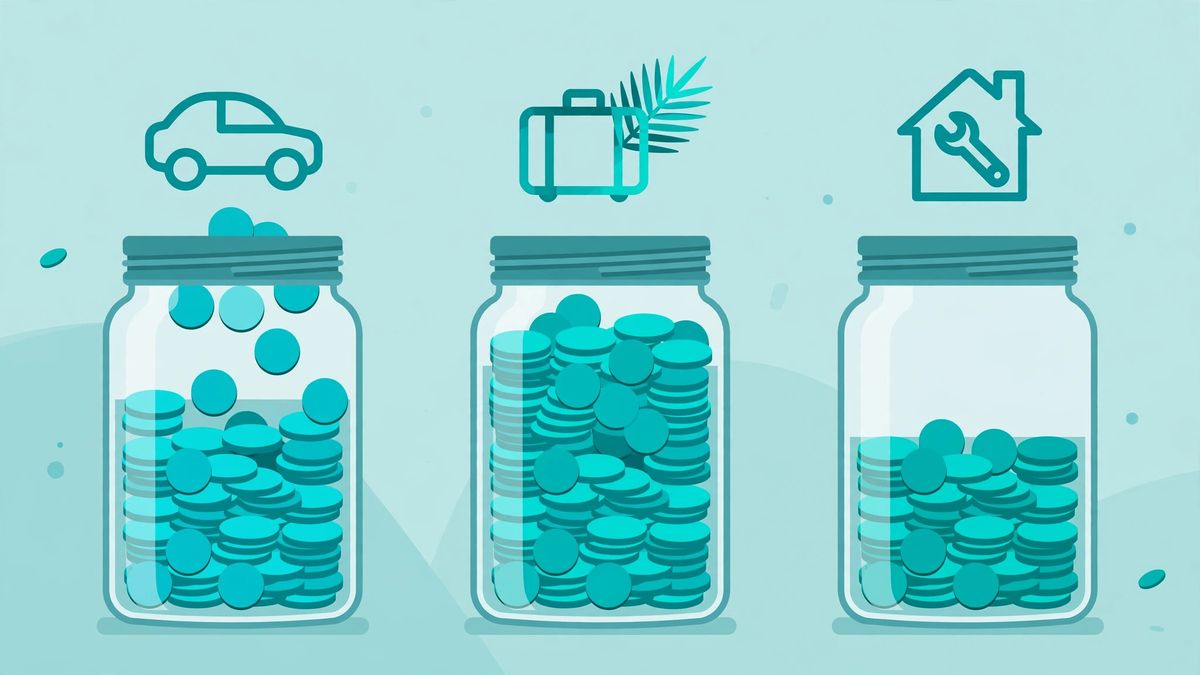
Every year has the same ambushes. The car insurance premium lands in March. Christmas arrives in December, exactly on schedule, somehow still a surprise. The annual antivirus subscription renews itself at the worst possible moment. None of these are emergencies — you knew they were coming — yet they still end up on a credit card.
The fix is a sinking fund: a small, named pile of money you build monthly for a specific future bill. It is the least glamorous and most effective budgeting tool most people have never set up. Here is how it works and how to build yours in an afternoon.
The two-bucket rule: predictable vs. surprising
Money advice usually talks about one safety net, but you actually need two buckets with a strict wall between them:
- Emergency fund — for true surprises: job loss, an ER visit, a furnace dying in February. Money you hope to never touch.
- Sinking funds — for predictable irregulars: insurance premiums, property tax, holiday spending, car registration, annual subscriptions, the vet's yearly checkup. Money you fully expect to spend.
Mixing the two is why emergency funds keep "mysteriously" shrinking. Every time Christmas raids the emergency fund, the fund did not fail — it was spent on something that was never an emergency. Sinking funds exist so predictable bills stop disguising themselves as surprises.
Step 1: List every irregular-but-predictable expense
Sit down with twelve months of bank and card statements and hunt for the lumpy ones — bills that do not arrive monthly but always arrive. The usual suspects:
- Car insurance (every 6 or 12 months), home or renters insurance (annual)
- Vehicle registration, inspections, and routine maintenance
- Property tax or HOA dues, if not escrowed
- Holiday gifts and travel, back-to-school costs
- Annual subscriptions: streaming bundles, software, memberships, domain renewals
- Medical: annual physicals, dental cleanings, contact lens orders
- Pet: yearly vet visit, vaccinations, license
Write each one with its amount and month due. Most households find six to twelve items totaling a few thousand dollars a year — money that is currently "surprising" them on a completely predictable schedule.
Step 2: Turn each annual bill into a monthly number
The math is deliberately boring: total cost divided by months until it is due. A $900 car insurance premium due in six months becomes $150 a month. A $600 Christmas, starting in January, becomes $50 a month. A $120 annual subscription renewing in nine months becomes about $14 a month.
Add them up and you get your monthly sinking-fund contribution. A realistic example:
- Car insurance: $150/mo
- Christmas and holidays: $50/mo
- Car maintenance and registration: $60/mo
- Annual subscriptions: $25/mo
- Medical and dental: $30/mo
- Total: $315 a month that used to arrive as panicked lump sums
That number can sting the first time you see it. But notice: you were already spending this money. You were just spending it in crisis mode, usually with interest attached.
Step 3: Give each fund its own home
A sinking fund only works if the money is separated from daily spending. Three setups that work, pick one:
- Sub-accounts or "buckets" inside one high-yield savings account — most online banks let you create named buckets for free. One account, many labeled jars.
- Separate savings accounts — one per fund, or one for all sinking funds if your bank limits accounts. The label matters more than the structure.
- A spreadsheet plus one account — the minimalist version. One savings account, and a sheet tracking how much of the balance belongs to each fund. Works, but requires discipline at withdrawal time.
Then automate a transfer on every payday. The money should leave checking before you have a chance to negotiate with yourself about it.
Which funds to start first
Do not try to fund all twelve at once — that is how systems die in week two. Start with the two or three bills due soonest, or the ones that caused the most stress last year. A $900 insurance bill due in three months needs $300 a month starting now; that urgency makes it the obvious first fund. Once a fund is fully built and the bill is paid, its monthly contribution rolls into the next fund. The system snowballs by itself.
Sinking funds on irregular income
If your income varies, fund sinking funds from your priority list right after the essentials, the way you would treat any bill. In lean months, fund only the minimum — the contributions for bills due nearest. An alternative that works well for freelancers: contribute a fixed percentage of each paycheck (say 8%) to sinking funds instead of fixed dollar amounts. Good months overfund, lean months underfund, and it roughly evens out across the year.
Three ways people wreck their sinking funds
- Raiding a fund for something else. The Christmas jar is not a sale-at-the-mall jar. If you borrow from a fund, write down the repayment plan the same day or the fund silently dies.
- Counting the same dollar twice. Money in a sinking fund is already spent — mentally, it belongs to the future bill. Do not also count it as "savings" in your budget.
- Stopping contributions after the bill is paid. The most common failure. The insurance bill got paid, the transfer gets cancelled "temporarily," and six months later the ambush returns. Refill starts the next payday, no exceptions.
Start with one fund this week
Pick the next big predictable bill on your calendar. Divide it by the months until it is due. Open a named bucket and set up the transfer today. One fund, running automatically, teaches you more than a perfect twelve-fund spreadsheet you never start. The ambushes will keep coming on schedule — the only question is whether the money is already waiting for them.